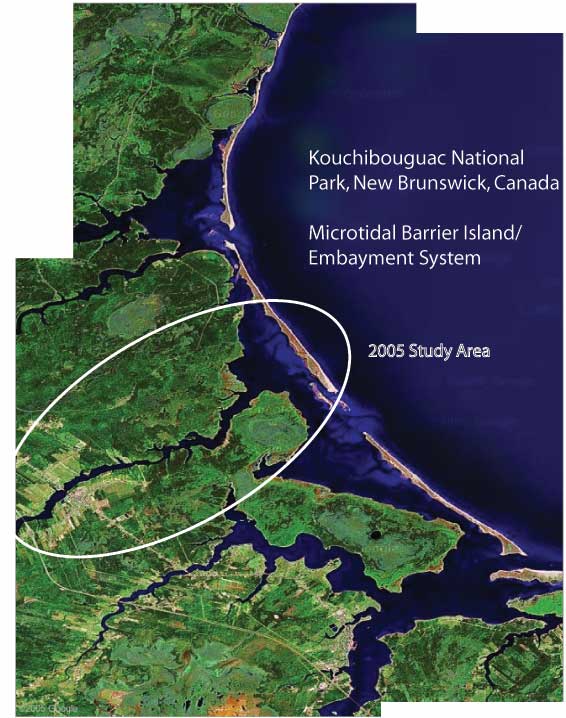
The study will focus on the sedimentology and the neoichnology of Kouchibouguac’s barrier island/embayment system. The sedimentology will involve an investigation of the source and distribution of the sediments found within the system, and the distinct sub-environments that are the result of deposition of these sediments. Examination of the fluvial, lagoonal, salt marsh, and barrier bar areas, separately and as a whole dynamic system, will illuminate the interactions between these environments and how each plays a role in the barrier island/embayement system. Sedimentary structures will provide evidence as to the method of deposition and the associated facies. Expression of wave, tidal and fluvial influence will be evidenced throughout the study area. An example is the changing salinity in the system with freshwater fluvial input. Another is the influence of tidal and wave energies on the shape and distribution of the attached and detached barrier bars. These will be put in the context of how they affect the organisms that call the beach sediments their home and the resultant neoichnology, which are the traces left in the sediments through the activities of the animals.
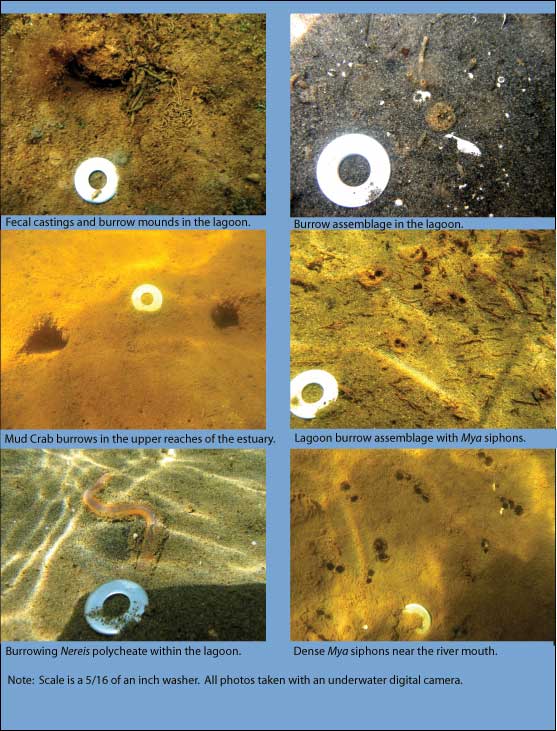
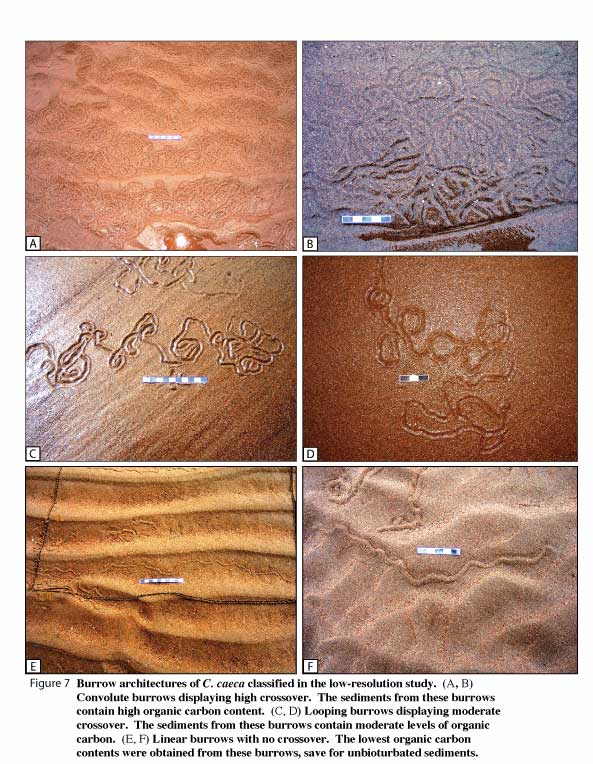
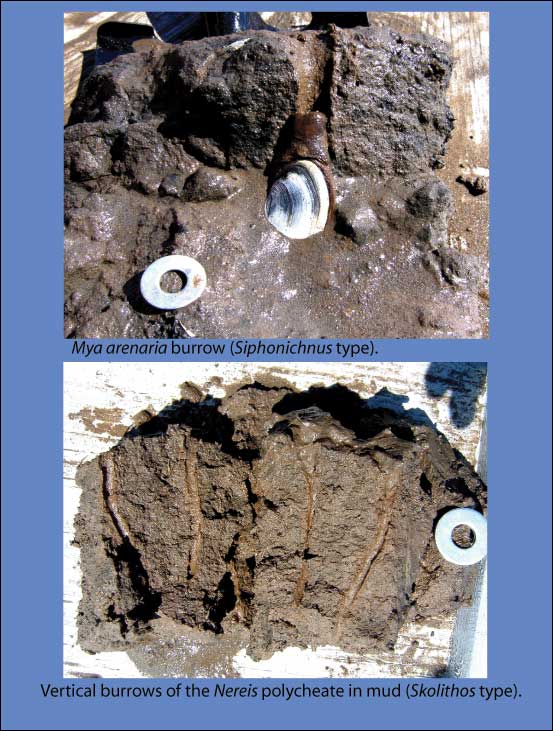
The study of neoichnology will involve determining the taxonomic classification of the animals that produce traces in the study area. The reason for their burrowing activity will be determined, whether it be for grazing, hunting, dwelling, or farming within the sediment. In other words, the traces and burrows left by the animals reflect their behaviour. How is burrow morphology affected by salinity changes, tidal influence, and wave action? How does the ichnological assemblage in Kouchibouguac’s microtidal environment compare with those observed in meso- and macrotidal systems? An examination of burrow morphology compared with that found in other barrier island systems will illuminate differences in the influence of sedimentary inputs, and ultimately will provide detail into what distinguishes Kouchibouguac from other similar systems in both modern and ancient depositional systems. What are the variations in presence/absence, association/disassociation, and burrow size throughout the system? What are the lateral burrowing extents of certain trace makers due to tolerances of changes within the area? Are they facies specific?
Tectonic and glacial controls, and their affect on sea level and subsequent evolution of Kouchibouguac’s barrier islands system will be determined through research.
An extensive literary search will be conducted throughout the project to compare and contrast, and gain understanding from previous studies on similar topics. The description of the study may change slightly over time due to new insights and further research into the topics under discussion here.